Event
Wassail 2027
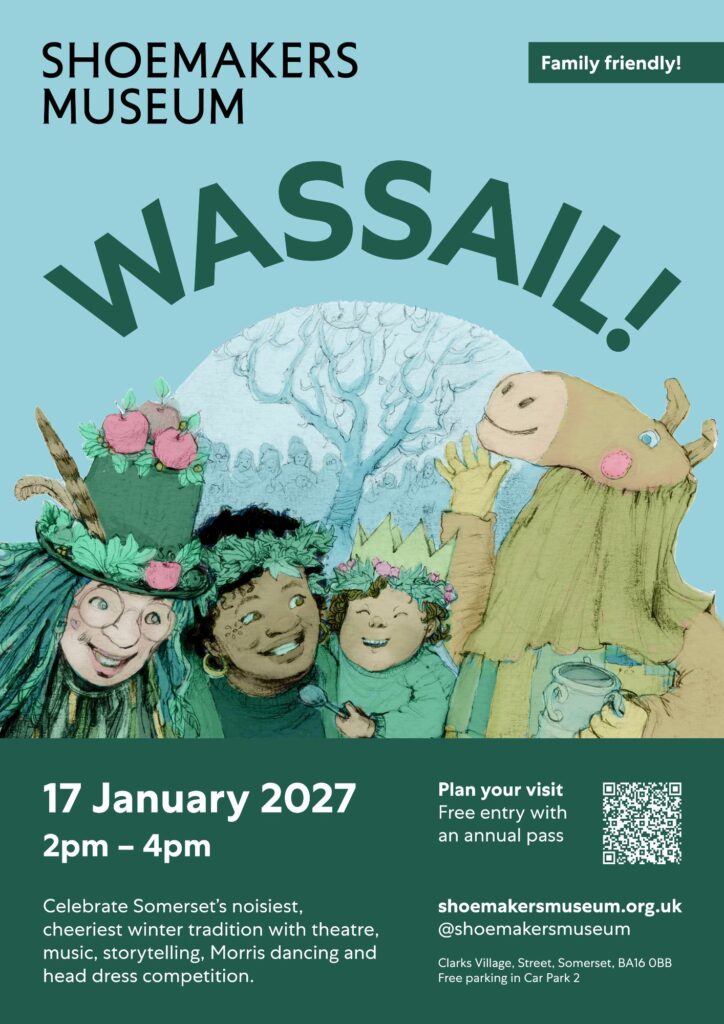
Sun 17 January | 2pm - 4pm
A traditional family-friendly orchard celebration with song, music, theatre and a dash of Somerset mischief. Free event for museum pass holders. You don’t need a special ticket for wassail, just your regular annual museum ticket. If you need get yours save the queue and a bit of money by buying online. See you there!
A friendly family friendly day-time wassail, free for museum pass holders in Shoemakers Museum's beautiful walled orchard.
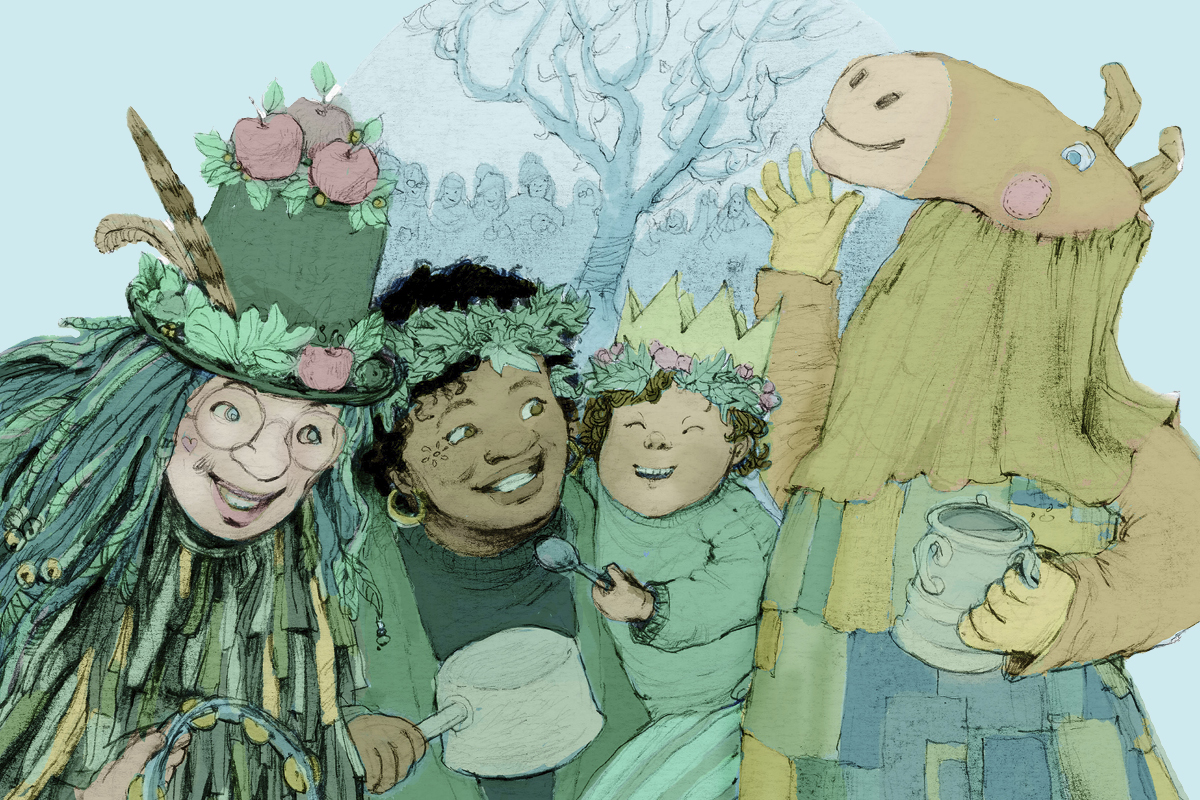
Come along to a welcoming West Country celebration of our orchards. An afternoon for all the family and friends to enjoy together.
Join us for an afternoon steeped in Somerset tradition.
We will gather to celebrate the age old custom of wassailing – blessing the apple trees to bring a bountiful harvest in the year ahead. With song, music, theatre and a dash of Somerset mischief, we will chase away the bad spirits and bless the trees in our historic walled orchard.
Together we will enjoy the spirit of community that Somerset is known for.
Come and be a part of history – add your voice to the Wassail and help us welcome in the New Year Somerset style with joy and cheer!
Ready your wassail crown.
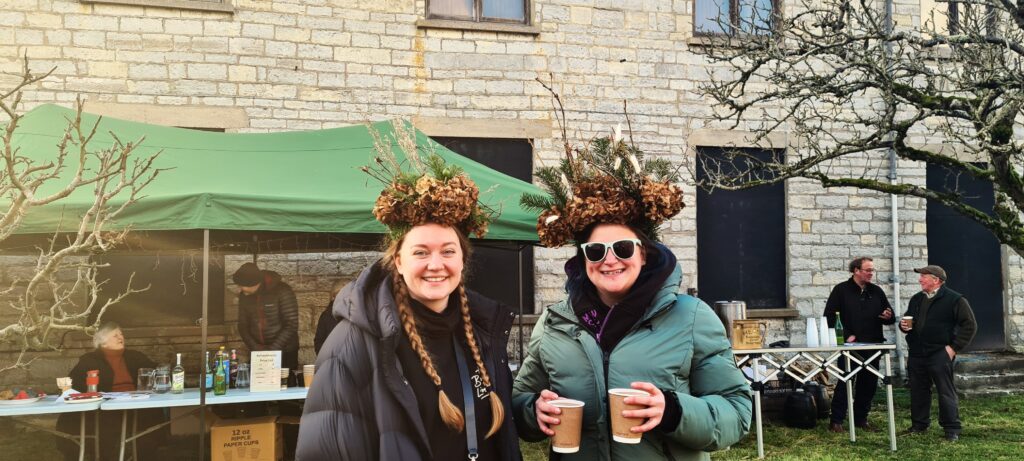
This year we invite visitors to dress in splendour – with prizes for the best wassail themed crown (with adult and children categories this year!). If you need a little help there will be a drop-in crown making session in the education room before the wassail starts.
This is an outdoor event which takes place whatever the weather so please wrap up warm and wear good footwear as the orchard has an uneven grass surface.
This is a free event for Shoemakers Museum ticket holders.
You don’t need a special ticket for wassail, just your regular annual museum ticket. If you need get yours save the queue and a bit of money by buying online. This is a popular event.
New this year
We are welcoming additional morris dancers with an opportunity to get involved and join them in a dance.
Prizes – for adults and children – for the best wassail-themed crowns. Think apples, harvest, seasons and nature.
Storytelling marquee.
Plus the usual wonderful theatre, song, community and orchard ceremony.
What is a Wassail?
The tradition of Wassailing is an ancient custom which is believed to originate from the Anglo-Saxons.
The word comes from the Anglo-Saxon phrase ‘waes hael’ which means ‘good health’.
For this event we will be performing one of the two different forms of Wassailing which is giving thanks to the cider-bearing apple orchard at the Grange. This custom is most prevalent in the West Country, but particularly Somerset (we are the cider drinking Capital of the UK after all!).
Before 1752 the calendar year was dictated by the Julian Calendar. However, this was changed (following the Calendar Act of 1750) to a Georgian calendar to bring the Country in line with the sun’s movement around the Earth. These changes removed 11 days from the year, however, many people continued to honour some customs by the old calendar, therefore the 17th January was the most common date for blessing the tree. (To put this in perspective, in modern times, the twelfth night falls on the 5th of January).
The custom of giving thanks to the trees for a bountiful harvest is believed to stem from the pagan tradition, which as well as giving thanks, would also scare away any evil spirits.
Traditionally, Wassailers would gather around the oldest tree in the orchard as it was thought to provide fertility to the younger trees.
Cider is sprinkled on the tree to offer thanks and promote a bountiful harvest the following year. Toast is offered, traditionally, as an offering to the Robins. Shots are fired to scare away bad spirits.
A short history of the apple
The eating apple we know today began its life some 4000 years ago in Asia. Down the centuries where ever people have settled to farm the land, they have taken with them the apple tree. It is woven into our legends, our history and religious beliefs. It is a part of us, and nowhere more so than in the western counties of England where the cider maker’s art is still revered and the growing of apples treated with the greatest respect.
The history of the cider apple is some what shrouded in the mists of time. The apple is certainly indigenous to the British Isles and the Celtic tribes may well have held it in special regard as it is a host for the sacred mistletoe. The Celtic word for apple was Abhall, which undoubtedly where we have derived the name today. The sacred island mentioned in the myths of King Arthur, that of Avalon translates into ‘apple orchard’. Thus Glastonbury, the ancient isle of Avalon, holds some importance being at the very heart of the county of Somerset.
Apples are broadly divided into 4 groups by juice quality;
- Sweet
- Sharp
- Bittersweet
- Bittersharp
The first two groups will contain the eating and cooking varieties that we know today, whilst the majority of the traditional cider varieties will lie in the Bittersweet and Bittersharp groups.
The Romans are said to have had over 100 named apple varieties, and certainly the Normans brought with their 1066 invasion, a culture of cider drinking. Many of the great monastic establishment of the middle ages had their orchards for the production of this drink.
Book your museum passPlan your visit
Your journey starts here. Find out more about Shoemakers Museum opening hours, times and how to get here.
Plan your visit